

American Indian and Alaska Native people have an exemplary tradition of military service and sacrifice[i]. Despite the resilience and strengths of Native Veterans, this population experiences suicide at an elevated rate[ii]. It’s important to provide support and suicide prevention efforts that honor their culture, promote healing, and strengthen communities.
This month, we’re highlighting the work of Eastern Band of Cherokee Indians (EBCI) to address suicide and support Veteran mental health through cultural connection. SFC Gerard Ball, a U.S. Army Veteran, is the Program Director for the Veterans Services Office of EBCI. During his tenure, EBCI has worked to build awareness of the services his office offers to Native Veterans and launched new events, such as an EBCI Tribal Veterans Stand Down, to bring these resources directly to the community members who need them.. This event provided essential services such as Medicaid enrollment, health screenings, mental health services, employee assistance, gear distribution, and haircuts.
In this interview, Gerard shared his perspective on the benefits of cultural connection and what that means to Native American Veterans, his advice for others working with Tribal Nations, and his vision for the Eastern Band of Cherokee Indians Veterans Services.
In your words, how does cultural connection benefit Veterans mental health? What does “cultural connection” mean or look like to you?
Cultural connection significantly benefits Native American Veterans’ mental health. When engaging with traditional practices, community and identity help foster healing among Native Veterans. Reconnecting with tribal traditions, language, and spirituality helps Native Veterans reclaim a sense of identity and purpose. These can be especially healing after military service as Native Veterans face higher rates of PTSD and suicide than the general veteran population, partly due to historical trauma and systemic barriers. In my experience, programs that incorporate culturally responsive care have been very well received by our communities. As I have gotten older, I have seen within myself more importance placed on my culture and community. I strongly believe that the sense of returning and honoring my culture has helped me heal and move forward throughout my life. Connection has helped create a better version of myself.
What advice do you have for non-Native people who find themselves working with Tribal SMVF?
The one piece of advice that I can give that I have seen the best results from is show up and keep showing up. Trust is earned over time. Show up consistently, listen deeply, and follow through on commitments. Many Native communities have experienced historical trauma and broken promises from outside institutions, which continue to this day. Patience and sincerity are key to a program’s success. I have seen that work time and time again.
What programs, initiatives, or events are currently in place in Qualla Boundary that reach your Tribal SMVF? Do you have any particular success stories or feedback from individuals that you’d like to share, especially related to mental or behavioral health?
Since taking over as the Program Director for Veteran Services for the Eastern Band of Cherokee Indians, it has been an educational process. There are numerous programs within the boundary that our Veterans can take advantage of, but these programs are not well advertised. It has been a goal of our division to try and provide a comprehensive description of these programs and how to apply for them. Since taking this position, I have observed that our community finally looks to this office for the support and resources that they need. That is a huge turnaround within the program and community.
One of the biggest wins in this program has been a partnership between Veteran Services and Tribal Enrollment which is documenting and maintaining a database of all our enrolled EBCI Veterans, maintaining a copy of their DD-214, and having those available and secure for the Veteran and their family need them. That helps not only have this document for the Veteran and their family but also helps us document for historical purposes our history and culture for future generations.
Tell us about your goals for SMVF in Cherokee, NC and the Eastern Band of Cherokee Indians. What is your vision?
This is plain and simple and has been my goal since day one! I want the Eastern Band of Cherokee Indians Veteran Services Program to set the standard for Veteran services across Indian Country.
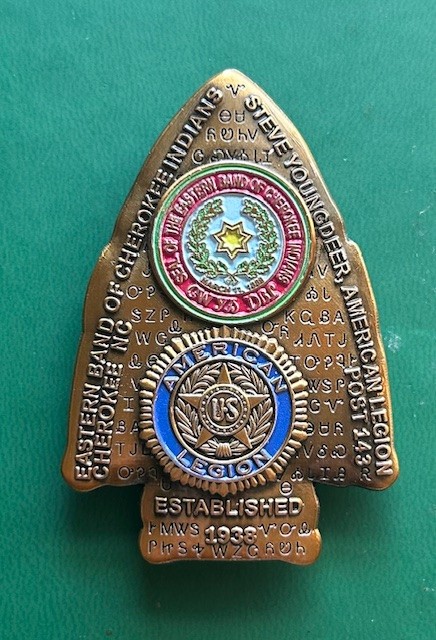
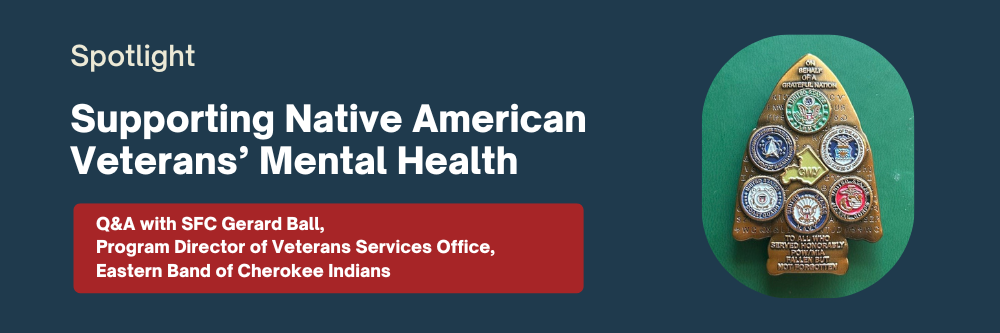
The new Challenge Coin design features the seal of American Legion and Eastern Band of Cherokee Indians overlaid over the Cherokee syllabary. On the reverse side, the seals of all six military branches are featured alongside an outline of Qualla Boundary, the home of Eastern Band of Cherokee Indians.
You have recently overseen the redesign of the Eastern Band of Cherokee Indians American Legion Challenge Coin and begun work on a new Challenge Coin design. How do the updated challenge coins fit into your team’s vision?
The challenge coin is significant in many ways: it is a symbol of support from one Veteran to another or to the community or the person who receives it as a symbol of thanks and support. I am in the process of having a coin made specifically for my office which represents and pays respect to our veterans and community by including our past and our future. This coin will be the rockstar of all coins. I can’t wait to share it with you all.
Special thanks to SFC Gerard Ball for sharing his office’s work to support Native American Veterans’ mental health and end Veteran suicide among citizens of Eastern Band of Cherokee Indians. He is a U.S. Army Veteran and citizen of Eastern Band of Cherokee Indians based in Qualla Boundary, Cherokee, North Carolina.
Thank you for your continued support and dedication to improving behavioral health care for those who have served, and are currently serving, our country.
SAMHSA’s SMVF TA Center is honored to provide TA to states, territories, and communities seeking to strengthen their behavioral health support for those who have served in the armed forces. For TA inquiries, please email smvftacenter@prainc.com. For more information about the SMVF TA Center and the resources offered, please visit SAMHSA’s SMVF TA Center’s web pages.
References
[i]National Museum of the American Indian, Smithsonian Institution. “Why We Serve.” Home Page. Accessed October 21, 2025. https://americanindian.si.edu/why-we-serve/.
[ii]Office of Suicide Prevention, U.S. Department of Veterans Affairs. (2024). 2024 National Veteran Suicide Prevention Annual Report. Retrieved October 21, 2025, https://www.mentalhealth.va.gov/docs/data-sheets/2024/2024-Annual-Report-Part-1-of-2_508.pd