

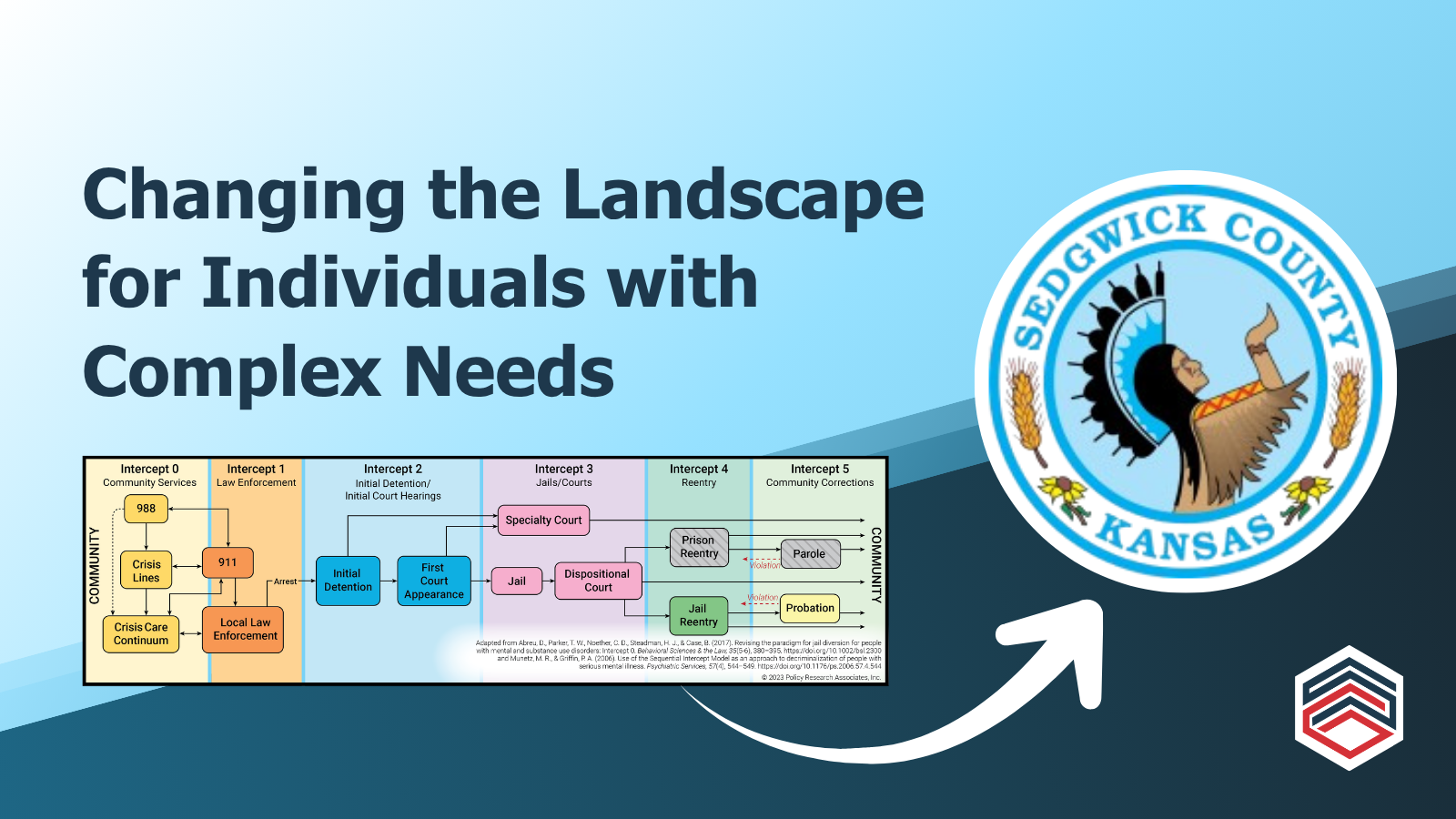
For more than two decades, the Sequential Intercept Model (SIM) has guided communities seeking to reduce criminal justice system involvement of people with mental and substance use disorders by improving cross-systems collaboration. In 2021, a new framework using the SIM was developed to address individuals with complex needs associated with a range of disabilities (see Figure 1). This framework, named the ICCoD and SIM Convergence Framework, and the corresponding workshop provide jurisdictions with the opportunity to engage in structured discussions and planning to improve supports for individuals with ICCoD who are engaging with the criminal justice system. Early adopters of the ICCoD and SIM Convergence Framework in Kansas provided the opportunity for Johnson County to “run with the ball.”
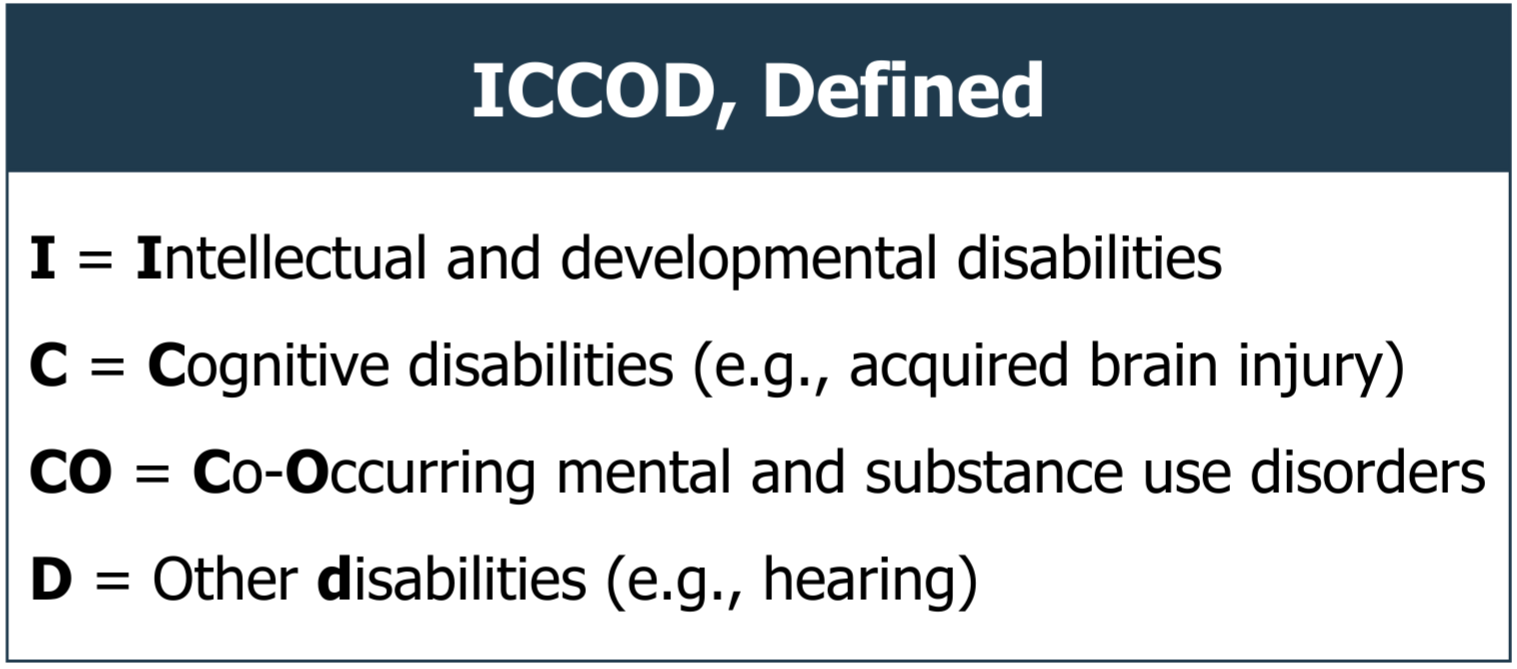
Figure 1
Where It All Started
Sedgwick County Developmental Disability Organization leadership in south-central Kansas is credited for hosting the first SIM Mapping Workshop in the country that specifically focused on individuals with ICCoD who display high-risk behaviors. This 2-day event and subsequent conversation among participants (see Figure 2) prompted plans for a statewide summit on the same topic. The Sedgwick County workshop also prompted the inclusion of ICCoD issues and partners, such as Sunflower Health Plan and Interhab, into regional SIM Mapping Workshops conducted across the state.
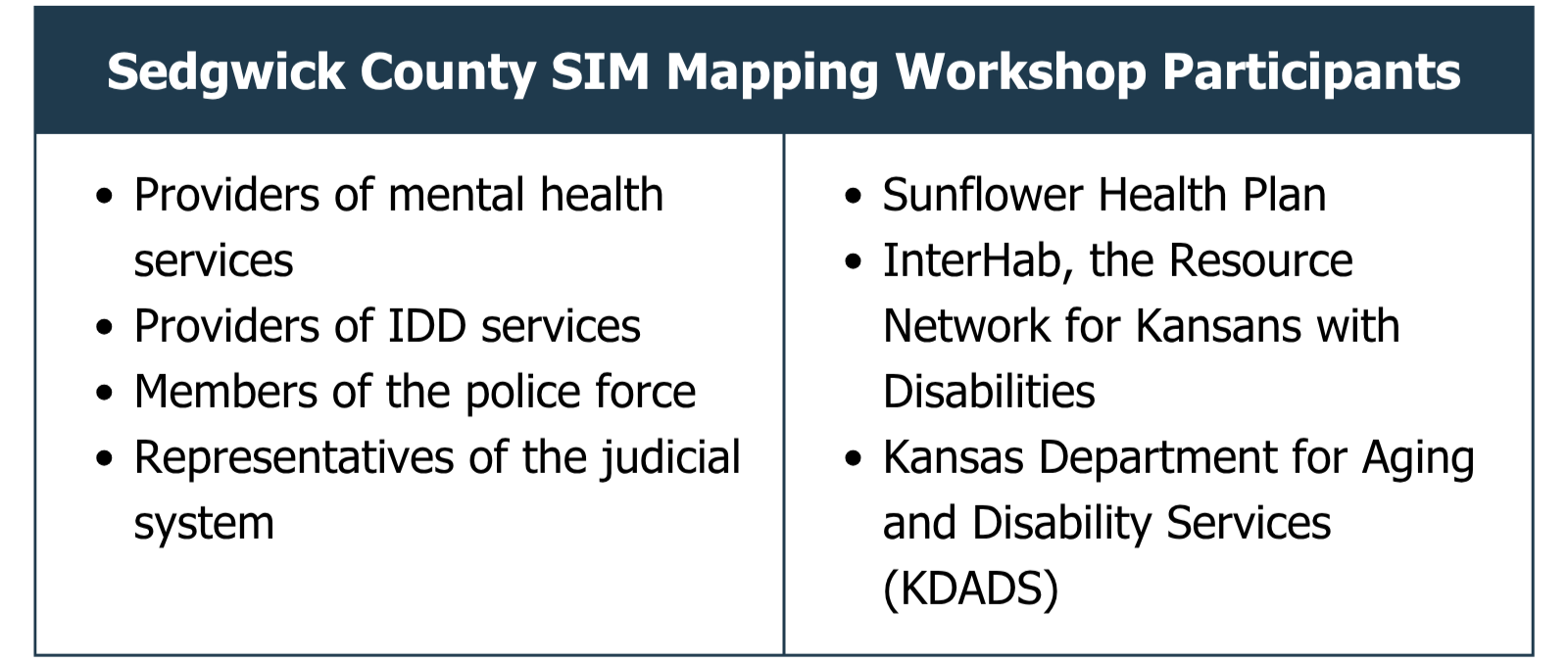
Figure 2
The Kansas Sequential Intercept Model Summit, hosted by the Kansas Department for Aging and Disability Services (KDADS) on November 9-10, 2022, was a statewide event. Approximately 80 individuals from various disciplines identified barriers in Kansas’s system, brainstormed how to better serve individuals living with ICCoD, and discussed case study examples.
“We invited any organization that might touch the lives of people living with ICCoD,” recalls Megan Shepard, KDADS policy and program oversight director for home and community-based services, who helped coordinate the summit. “With so many viewpoints and a history of boundaries within our system, some ‘finger-pointing’ naturally occurred during the summit. But we worked through it and collaboratively proposed solutions. One of the most important outcomes of the summit was getting people together in the same room to talk.”
Keeping Up the Momentum in Johnson County
A more formal outcome of the summit was identifying six priority areas for change. Robert McKeirnan, a police sergeant for the City of Olathe who participated in the summit, took special interest in the workforce development priority area.
“The statewide summit raised awareness about difficult systemic issues,” he reflects. “For example, what is the most appropriate response to someone who has no recognition of consequences due to their disability? Are there circumstances where custody may harm individuals? I know a woman who spent almost a year in jail before her case was ultimately dismissed due to her disabilities. She was unable to perform daily hygiene activities for herself while in custody and missed out on the important daily behavioral reinforcements she received in her group home. Unfortunately, these deficiencies caused serious social regression and health problems for her. We need to look for alternatives to the justice system, as far upstream as possible. To be able to do that, we need systems that are talking to each other and working toward the same goals.”
McKeirnan took what he learned back home to Johnson County, where he worked with the Kansas Law Enforcement CIT Council to strengthen the 4 hours of training on ICCoD in the Crisis Intervention Team curriculum. The training, delivered in conjunction with Johnson County Developmental Supports, includes information on the ICCoD network, issues related to service providers, interaction strategies, specific diagnoses, and what to watch for in calls.
In addition to its participation in statewide efforts, another step forward for Johnson County was its local 2024 Intellectual and Developmental Disabilities Focused SIM Mapping Workshop, organized by the Johnson County Community Developmental Disabilities Organization. Action plans were created and are being carried out for priority areas identified during the workshop, which include the following:
- Develop a crisis respite center, including stabilization and transitional housing. The committee is focusing on the ideal of intervening before a person goes into a crisis or needs a crisis location. Subcommittees are exploring mandatory trainings (e.g., crisis intervention, communication), crisis homes, and legislation adjustments (e.g., allowing police the discretion to arrest or not arrest individuals with ICCoD).
- Increase information sharing and access to information. A comprehensive description and contact list for IDD services and providers, behavioral health, and related community services (e.g., 911 dispatch, police, co-responders, housing authority, food resources) is being compiled for sharing.
- Standardize the work of Direct Support Professionals (DSPs). As noted in The Direct Support Professional Crisis in Kansas, individuals with IDD rely on DSPs for a variety of tasks, ranging “from personal care to client empowerment and advocacy to crisis intervention.” The committee is considering training to improve DSP retention, competence, confidence, and capacity, which in turn may reduce risks, visits to the emergency department, police contacts, and adverse incidents.
Vested partners agree that much more needs to be done to better serve individuals with ICCoD, but the tremendous strides Kansas has taken thus far have not gone unnoticed. Regina Huerter, developer of the ICCoD and SIM Convergence Framework, remarks, “I’m so impressed by how Kansas is changing the landscape for people with complex needs and entire communities by operationalizing the framework, and this is due to the hard work of people at both the county and state levels.”