

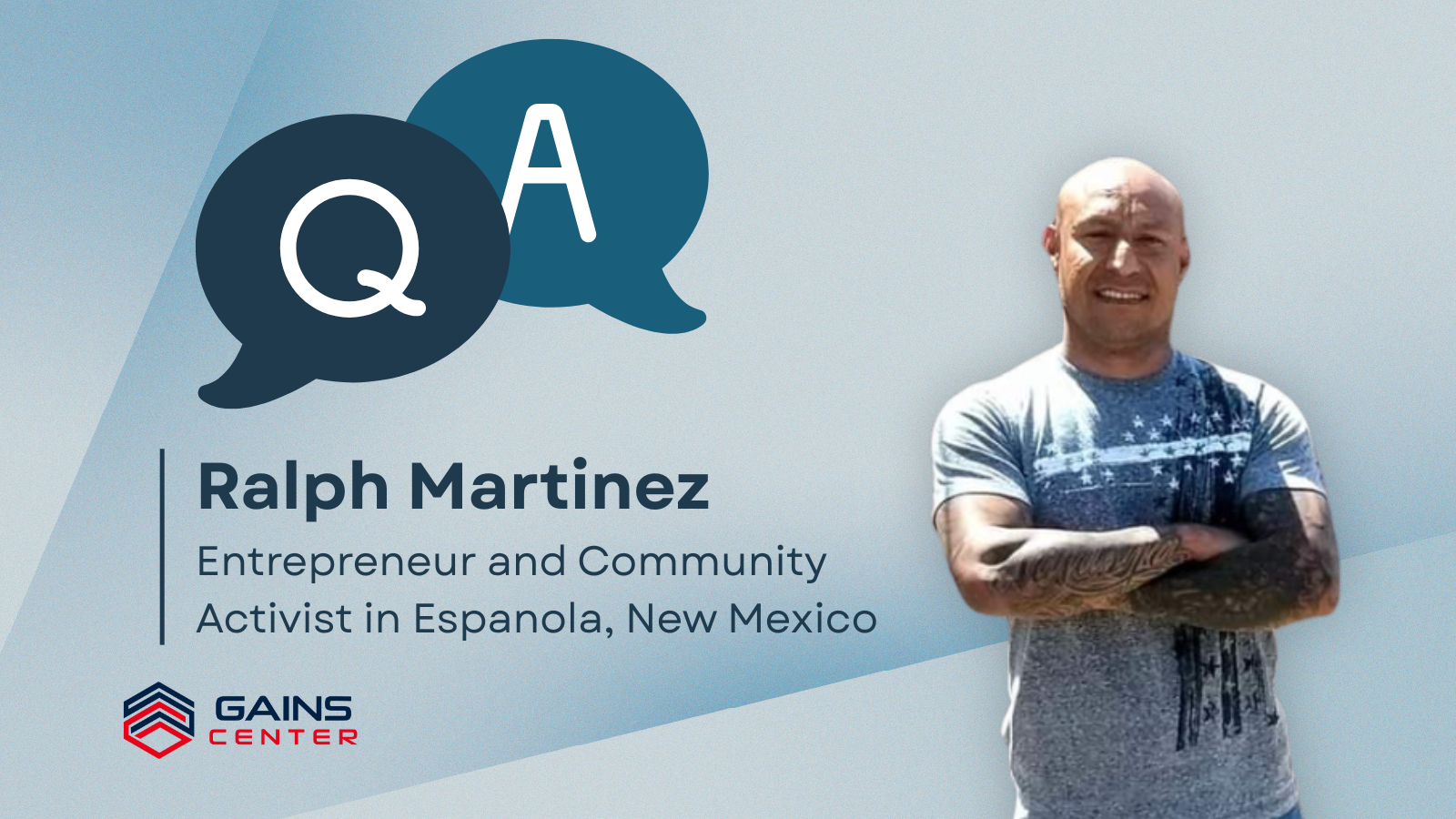
Ralph Martinez is an entrepreneur and community activist in Española, New Mexico, who draws upon his life experience with incarceration and recovery to bring together people and resources to support people in need.
In 2024, you co-founded the Entrepreneurial Institute of Northern New Mexico (EINNM). What is its mission, and how does it work?
EINNM is a 501(c)(3) organization dedicated to helping people make the transition from incarceration to community. We offer a program in the state penitentiary that teaches both culinary skills and professional skills.
Co-founder Chef Fernando Ruiz adapted a curriculum originally developed by the founder of the EDWINS Leadership & Restaurant Institute, an organization in Cleveland, Ohio, that also helps formerly incarcerated adults re-establish themselves upon release. Chef Ruiz tailored the curriculum to fit the environment and culture of New Mexico.
We conduct class at the penitentiary on Monday, Tuesday, and Thursday evenings, from 6:30 to 10:30. After hands-on instruction in culinary techniques, we sit with the students to eat what they have prepared. The program is 8 weeks long, and participants who complete it are eligible for AAA Food Handler and ServSafe certification exams. Class is limited to 14 students, all of whom are within 10 months of release.
The professional skills we teach include speaking with confidence, using appropriate language, putting together a resume, and participating in mock interviews. After release, we help connect the students to employment through our connections with multiple trades (such as crane operation, HVAC, electricity, plumbing, and truck driving) and our strong ties to local community colleges.
Sometimes, students accept job offers from Chef Ruiz, who owns the Escondido Santa Fe restaurant. He gradually reintroduces them to the work world but does not expect them to stay permanently. Once they get used to the routine, we want them to dig deep to find out what they really want to do in life. The sky is the limit.
Phenomenal people serve on EINNM’s Board of Directors. Most have lived experience with incarceration and/or substance use. Two of our board members also teach the professional skills portion of the program. One of them wrote a book about changing the mindset of criminal activity and devoted a whole chapter to the importance of a good resume, so he is perfect for teaching resume-building. Another board member served time in prison for selling narcotics; now he is really involved in pushing bills through the legislature, such as reinstating voting rights for people who are incarcerated. They are all giving back in such beautiful ways.
What prompted you to establish EINNM?
Chef Ruiz and I have been working together on various community projects since we met in 2019. A while back, we started talking about offering a culinary class in the prison. We dreamed about a program that could be offered statewide, regionally, and even across the country!
To make this happen, we knew we needed some sort of entity. With substantial support from Innovate+Educate, we set up EINNM as a 501(c)(3) organization. That was a lengthy process, during which we were also meeting with judges, probation and parole officers, agencies addressing reform and recovery, and administrators of correctional facilities to gauge support. We also conducted a test run of the program for at-risk youth and formerly incarcerated individuals in the community, which exceeded our expectations. Within 90 minutes of advertising the program, twice as many people as we had hoped for signed up!
As we pursued our dream, we never imposed any deadlines; everything just unfolded. About a week after the test run, the New Mexico Department of Corrections (DOC) invited us into the penitentiary when we were ready. Shortly after, we were notified of a funding award. We ran the first in-prison session in June of 2024. The success of that session prompted DOC to request sessions for three cohorts per year.
“Second chances” are important to you. Why?
I come from a background of second chances. For 11 years, starting in 2001, I was addicted to cocaine and heroin. In 2006, I lost everything: my family, my home, my self-identity. For 6 years, I lived under bridges, in makeshift tents, and in abandoned buildings. During that time, I went to rehab five times and served jail time in six counties.
In 2012, I planted my feet back on the ground. It was not easy, because I come from a very small community where everybody knows everybody. The stigma around substance use disorder and criminality was overwhelming. I had failed so often, but this time I was serious about changing my life. I applied for jobs all over town: every gas station, fast food joint, and grocery store. Nobody called me back because they “knew” who I was.
I finally called a caseworker I had met 2 years prior, when I was in jail. “Miss B” has always been there for me, bringing me food when I was homeless and offering support when I was ready to take the next step. She knew the manager of a gas station where I applied and put in a good word for me. The manager called me for an interview and said, “I’m going to be 100% honest with you. I know who you are, and I know what you’re about. Miss B really has a liking for you and asked if I would please give you a chance.”
I got the job and stayed there a year and a half, until I was comfortable in my recovery and ready to do something more with my life. One thing led to another, and here I am today.
So, I know how important it is to provide an opportunity to somebody. People are ready in their own time, but if they are not given a chance, they will never know success. We are doing our best to create that opportunity. Our participants go straight into the workforce and earn a wage they can survive on.
What advice do you have for people who are trying to rebuild their lives?
I encourage them to never stop trying. Do a lot of soul searching and accept what has happened in your life. You will then be able to put those things behind you and focus on the future, not the past. “One day at a time” really works.
You have turned your own life around, provided help to people, and raised millions of dollars to support others. Which of your accomplishments are you most proud of?
I am so humbled when I think about my life experiences being used as a tool for helping others. And I am blessed to be surrounded by a team of like-minded and like-hearted people who are committed to making things happen.
I am the co-founder of the first-ever homeless shelter in my community, and visiting that shelter warms my heart. We transformed a two-story shopping plaza into the Española Pathways Shelter, which is a low-barrier shelter. Downstairs, we have two dormitories, one for women and one for men, with beds for up to 20 people each. We also have a family room and can accommodate two families. The shelter offers first-come, first-served lodging for one night, with services provided all day. The services include free meals, hygiene, laundry, and clothing; intensive case management; supportive wrap-around services, and employment readiness. We rent space in the top story to The Food Depot, Goodwill, and other organizations, which helps make the shelter more sustainable.
I also co-founded Eagle Village, which is a recovery living facility for people who have 6 months of verifiable recovery under their belts. They are welcome to stay for up to 18 months. We work with rehabs across the state, along with probation and parole, to select the perfect candidates. We help the residents find jobs, save money, and get prepared for more sustainable living. Right now, we have an 85 percent success rate.
The shelter is a big deal for me because I have lived through the same experiences the residents have. The tagline in one of the videos we created when we were raising support for the shelter is, “Viable pathways toward a more productive life for human beings in need.”
I consider that my greatest accomplishment: creating pathways for people.